
Welcome to the Vision Aquatics family,
Starting a marine aquarium is one of the most rewarding journeys in the aquatic world. Whether you’re dipping your toes in with a nano tank, like the Tropical Marine Centre First Wave or Next Wave or planning to go all in with a large tank like the D‑D Reef Pro 1500, the fundamentals of a successful reef are the same: patience, stability, and good husbandry.
At Vision Aquatics, we help hobbyists at every level build thriving marine systems; from nano reefs to full‑scale show tanks. All tanks are available from Vision Aquatics; smaller tanks can be collected from the store and larger ones delivered right to your door!
This guide walks you through the essential steps of setting up your first marine aquarium, cycling it correctly, choosing rock, mixing water, and introducing your first clean‑up crew, fish, and corals.
Choosing Your First Marine Tank
Nano Tank
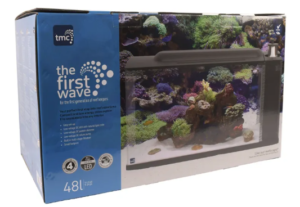
These tanks come in various sizes but are classed as nano tanks as the filtration system is built into the aquarium and they do not have a sump, so everything is contained within the aquarium.
The 48‑litre and 78-litre First Wave tanks from Tropical Marine Centre are an ideal entry point. They’re compact, quiet, and comparatively cheap, giving new hobbyists a stable platform to learn the basics of marine keeping without being overwhelmed.
Standard Tank.
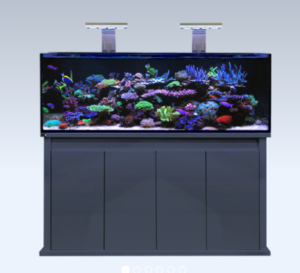
These tanks are designed to have a display tank with a sump underneath, usually in a cabinet designed to hold the tank. The sump is where the filtration and conditioning of the water normally occur.
An example of this is the D‑D Reef Pro 1500 which offers a premium, high‑volume system with sump filtration, excellent stability, and room for advanced coral growth. Many hobbyists start small and eventually upgrade, the principles you learn on a 48L tank scale perfectly into a larger system.
…And Everything In Between
Whether you’re looking for a nano reef, a mid‑sized peninsula tank, a full sump‑based system or something else, Vision Aquatics stocks a complete range of marine aquariums to suit every level and budget. From compact all‑in‑one setups to advanced reef‑ready systems, we’ve got the perfect tank to start your journey… and the next one when you’re ready to upgrade.
Setting Up Your Marine Aquarium
Before adding water, ensure your tank is:
Essential equipment includes:
Your rockwork is the biological backbone of your reef.
Live Rock
Man‑Made / Dry Rock
Our recommendation: A mix works beautifully, dry rock for structure, seeded with a small amount of high‑quality live rock or bottled bacteria to kick‑start the cycle. We carry both in store.
Marine tanks must be filled with Reverse Osmosis (RO) water – never tap water.
Why RO?
Mixing Saltwater
Alternatively, we sell water ready mixed water in store:
Cycling establishes the beneficial bacteria that convert toxic ammonia into nitrite, then nitrate.
How to Cycle
How Long Does It Take?
Typically, 2–6 weeks, though can be shorter, depending on:
When Is the Cycle Complete?
Your tank is ready when:
Bring in a water sample and we will test it for you! We also stock a full range of water test kits should you want to learn how to do this at home: Vision Aquatics eBay Store.
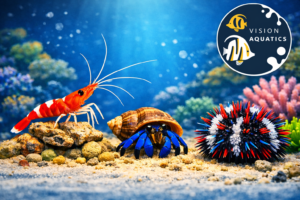
Once the cycle is complete, the first inhabitants should be copepods and your clean‑up crew.
Great beginner CUC options include:
Introduce them slowly, you don’t want more CUC than your new tank can feed.
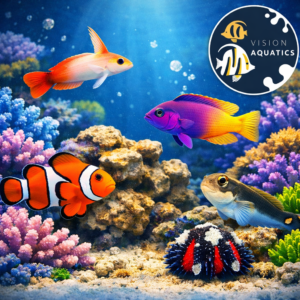
After your CUC have settled in, you can begin adding hardy, beginner‑friendly fish.
Great First Fish
Add fish gradually, allowing the system to adjust to the increased bioload, rather than overwhelming it.
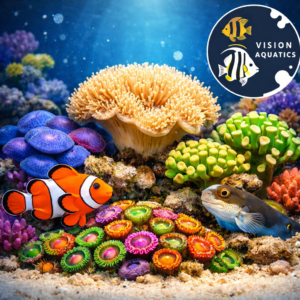
Corals should be added only once:
Beginner‑Friendly Corals
Avoid SPS until your tank is mature (6–12 months).
We have a range of coral available online and more in the store: VisionAquatics.co.uk
When to Upgrade
Many hobbyists start with a nano reef and eventually move to larger systems. Signs you’re ready include:
The skills you learn on a nano 48L / 78L tank translate perfectly into a larger reef.
Final Thoughts
Starting a marine aquarium is an exciting journey, and with the right guidance, it’s far more accessible than many people think. Whether you’re beginning with a compact TMC First Wave or planning a future upgrade to a D‑D Reef Pro, the fundamentals remain the same: stable water, good equipment, and patience.
At Vision Aquatics, we’re here to help you every step of the way, from choosing your first tank to stocking it with healthy, hand‑selected fish, corals, and invertebrates. We offer a tank installation service and stock all the essentials to get you started in the hobby as well as specialist, invertebrates, fish and corals.