
When we think about building a beautiful marine aquarium, our minds naturally go to colourful corals, fascinating fish and striking rockwork.
But there is another group of marine life that deserves far more attention: macroalgae.
Macroalgae aren’t simply something to grow in a sump or refugium. Used correctly, they can become an important part of a healthy marine system, helping to manage nutrients, support biodiversity and create a more natural-looking environment.
And the best part? They can look absolutely stunning.
At Vision Aquatics, we have a selection of macroalgae that can be used for everything from dedicated refugiums and natural filtration systems to eye-catching additions to the display aquarium.
So, What Exactly Is Macroalgae?
Macroalgae are large marine algae that are visible to the naked eye — essentially, the seaweeds of the marine aquarium world.
Unlike nuisance algae that we generally try to remove from our aquariums, macroalgae can be deliberately cultivated because they can perform a useful biological role within the system.
As macroalgae grow, they take up dissolved nutrients such as nitrate and phosphate from the water. When the algae is subsequently harvested and removed from the aquarium, those nutrients are removed with it.
This makes macroalgae a form of natural nutrient export.
And that’s just the beginning.
Why Add Macroalgae to Your Marine System?
🌿 Natural Nutrient Export
One of the biggest reasons reef keepers use macroalgae is nutrient management.
Fish waste, uneaten food and other organic material ultimately contribute to nitrate and phosphate. Macroalgae use these nutrients as they grow, helping to compete with nuisance algae for the same resources.
Regularly harvesting a healthy macroalgae colony physically removes those nutrients from the system.
It isn’t a replacement for good husbandry, water changes, filtration and sensible stocking — but it can be an excellent additional tool.
🦐 A Home for Beneficial Microfauna
A macroalgae-filled refugium can become a fantastic little ecosystem of its own.
The structure of the algae provides shelter for tiny organisms such as copepods and amphipods, allowing populations to establish away from hungry fish.
These organisms can then make their way into the display aquarium, providing a natural source of food and increasing biodiversity.
For many reef keepers, this additional biodiversity is one of the most appealing aspects of running a refugium.
💨 Supporting Oxygen and pH Stability
Macroalgae photosynthesise just like plants.
During photosynthesis they consume carbon dioxide and release oxygen. Running a refugium light on a schedule that overlaps or complements the display lighting can also help reduce the natural daily swing in pH associated with photosynthesis and respiration.
While macroalgae shouldn’t be viewed as a replacement for proper gas exchange and circulation, they can form another useful part of a well-designed marine system.
🌊 Creating a More Natural Environment
Perhaps one of the most underrated benefits of macroalgae is simply biodiversity.
A marine aquarium doesn’t have to be made up exclusively of rock, sand and coral. Introducing different forms of macroalgae can create additional structure and habitats while giving the aquarium a much more natural, ocean-inspired appearance.
And some varieties are genuinely beautiful enough to deserve a place in the display itself.
The Macroalgae We Have Available at Vision Aquatics
We’ve currently got a great selection of macroalgae available in store, with something to suit everything from a dedicated refugium to a display aquarium.
Let’s take a look at some of the varieties currently available.
🟢 Chaeto, The Refugium Classic
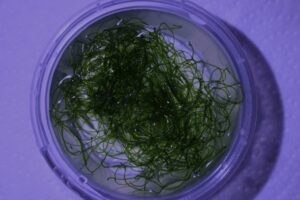
Chaetomorpha, commonly known as Chaeto, is probably one of the best-known macroalgae in the reef hobby.
It forms a dense mass of wiry green strands and is particularly popular in refugiums.
Its tangled structure makes it an excellent habitat for pods and other small organisms, while its growth provides a straightforward way of exporting nutrients from the system.
Chaeto is also relatively easy to manage because it doesn’t need to attach itself permanently to your rockwork. As it grows, you simply remove a portion and discard or trade it.
Best for:
If you’re looking for a simple, effective macroalgae for a refugium, Chaeto is a great place to start.
🌿 Green Blade, Simple, Clean & Vibrant
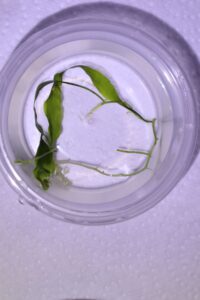
Green Blade brings a completely different look to the aquarium.
Its upright, blade-like growth creates a much more structured appearance than Chaeto, making it particularly attractive when you’re looking to incorporate macroalgae into the display rather than simply hide it away in the sump.
The vibrant green colour adds contrast against rockwork, corals and darker backgrounds, while the growing biomass can also contribute to nutrient uptake.
Best for:
It’s a great example of macroalgae being both functional and decorative.
🔴 Red Carpet, A Splash of Colour
Want something a little different?
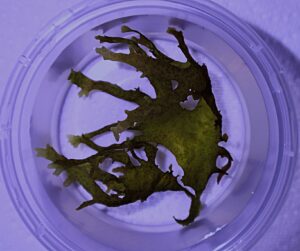
Red Carpet provides a rich red tone that can look fantastic amongst live rock and corals.
The contrasting colour makes it particularly useful for breaking up an otherwise predominantly green or blue reef environment.
Like other healthy macroalgae, its growth can contribute to nutrient uptake, while its structure creates additional habitat within the aquarium.
And aesthetically, it’s difficult to beat the contrast of deep red macroalgae against colourful SPS, LPS and soft corals.
Best for:
🟢 Bottlebrush Green, Texture & Movement
Bottlebrush Green is all about texture.
Its distinctive growth creates a three-dimensional appearance that can add another layer of visual interest to an aquascape.
The fine, branching structure catches the movement of the water and creates a natural, flowing appearance.
It’s particularly effective when placed amongst rockwork where it can soften hard edges and give the aquarium a more established, mature appearance.

Best for:
🌿 Green Feather, A Natural, Flowing Look
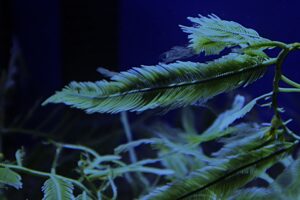
Green Feather is another variety that demonstrates just how attractive macroalgae can be.
Its delicate, feather-like structure gives it a much softer appearance than many of the more rigid forms of macroalgae.
Placed in the right position, it can sway naturally with the flow and create the appearance of a miniature underwater meadow.
It’s particularly effective alongside rockwork and can provide a beautiful green backdrop to corals.
Best for:
🔴 Red Ogo, Colour, Texture & Nutrient Uptake
Red Ogo is a favourite for aquarists looking to combine the benefits of macroalgae with serious visual impact.
Its vibrant red/purple appearance makes it stand out immediately, particularly against green macroalgae or colourful coral.
It can be used within a refugium for nutrient uptake or, where appropriate, incorporated into the display as part of a natural macroalgae aquascape.
It’s also a fantastic way of introducing more colour into an aquarium without relying solely on corals.
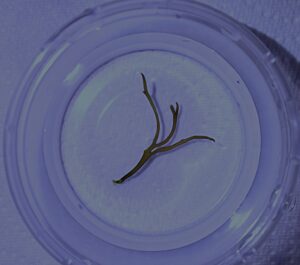
Best for:
🌿 Gracilaria mammillaris, The Versatile Red Macro
Gracilaria mammillaris is another excellent option for marine aquariums.
Its attractive red coloration and branching growth can give an aquarium a natural, almost miniature underwater-forest appearance.
As it grows, it can utilise dissolved nutrients within the aquarium, making it an attractive choice for aquarists looking for something that combines aesthetics with a useful biological role.
The red tones also provide excellent contrast against green macroalgae and colourful corals.

Best for:
Display Macroalgae vs Refugium Macroalgae
One of the biggest misconceptions about macroalgae is that it belongs exclusively in the sump.
That’s certainly where many reef keepers use it — and for good reason.
A dedicated refugium allows you to grow macroalgae specifically for nutrient export without it competing with corals for space in the display.
But that doesn’t mean it has to stay hidden.
Some of the varieties we have available can make fantastic display macroalgae, particularly when incorporated thoughtfully into the aquascape.
Think of them as another form of livestock.
Just as you might position a coral to create colour, movement and texture, macroalgae can be positioned to create a natural focal point or soften the appearance of rockwork.
🌿 Come and See Macroalgae in Action
If you’re still not convinced that macroalgae can be a stunning addition to a marine aquarium, come and see Aaron’s macroalgae tank in store.
Aaron has created a beautiful dedicated macroalgae display using the TMC First Wave 78-litre aquarium, and it really showcases just how impressive these often-overlooked marine organisms can be.
Rather than hiding macroalgae away in a sump, this setup demonstrates how different colours, textures and growth forms can be combined to create an aquarium that’s both visually striking and biologically useful.
The different shapes and colours create layers of texture and movement, while the natural growth forms give the tank a completely different character from a traditional coral-only aquarium.
It’s also a great opportunity to see macroalgae in a real display setup, helping you get a better idea of how different varieties could look in your own aquarium.
🌊 Functional Filtration Meets Natural Beauty
Aaron’s tank is a perfect example of what we love about macroalgae at Vision Aquatics:
Your aquarium’s filtration doesn’t have to be hidden away.
With the right setup and a little creativity, macroalgae can become part of the display itself — providing nutrient uptake, additional habitat and biodiversity while creating a beautiful, natural-looking underwater environment.
So, if you’re visiting the shop, make sure you take a look at Aaron’s 78-litre TMC First Wave macroalgae display.
You might just leave thinking about your aquarium’s algae in a completely different way!
The Important Part: Harvesting
There’s one key principle to remember when using macroalgae for nutrient export:
Growth is what removes nutrients — harvesting is what removes them from the system.
As the algae grows, nutrients are incorporated into its tissue. When you remove a portion of that algae from the aquarium, you’re physically removing those nutrients.
So don’t be afraid to trim your macroalgae.
Regular harvesting helps keep the algae actively growing and prevents it simply taking over the space available to it.
As with any form of filtration, macroalgae works best when combined with good overall aquarium husbandry rather than being treated as a miracle cure.
Which One Is Right For You?
Whether you’re setting up your first refugium, looking for a natural way of managing nutrients or simply want to add something different and beautiful to your reef, there’s a macroalgae to suit the job.
For straightforward refugium nutrient export:
🌿 Chaeto
For bright green structure:
🌿 Green Blade
For red colour and contrast:
🔴 Red Carpet
For texture and branching growth:
🌿 Bottlebrush Green
For a delicate, flowing appearance:
🌿 Green Feather
For vibrant red/purple colour:
🔴 Red Ogo
For a natural red, branching display:
🌿 Gracilaria mammillaris
Macroalgae: More Than Just “Algae”
The marine aquarium hobby has come a long way from simply viewing algae as something that needs to be eliminated.
The right macroalgae can become a functional part of your filtration system, a refuge for beneficial microfauna, a source of biodiversity and a genuinely beautiful part of your aquascape.
Whether it’s tucked away under a refugium light or proudly displayed amongst your corals, macroalgae offers something that few other additions to the aquarium can:
It can make your system look better while helping it function better.
And that’s something we think is worth celebrating.
While many reef keepers first discover macroalgae through refugiums and nutrient export, it also plays a hugely important role for species that naturally live amongst marine vegetation.
In the wild, animals such as seahorses, pipefish, dragonface pipefish and other secretive marine species are commonly found inhabiting seagrass meadows, mangrove habitats and dense beds of macroalgae. These environments provide shelter from predators, protection from currents and an abundance of natural hunting opportunities.
By incorporating macroalgae into the aquarium, aquarists can recreate elements of these natural habitats, creating a more enriching and biologically diverse environment. The added structure allows shy species to retreat, explore and display more natural behaviours than they often would in open rockwork systems.
For seahorses in particular, macroalgae provides excellent natural hitching posts, allowing them to anchor themselves comfortably throughout the day. Varieties such as Green Feather, Bottlebrush Green, Green Blade and Gracilaria mammillaris can create a beautiful underwater meadow effect that closely resembles the environments these fascinating animals have evolved to inhabit.
Pipefish and other specialist feeders also benefit from dense macroalgae growth, as it creates safe hunting grounds for copepods, amphipods and other tiny crustaceans. The algae itself becomes a living ecosystem, supporting biodiversity throughout the aquarium while providing a valuable natural food source.
Even in traditional reef aquariums, macroalgae can help create additional habitat for shy gobies, blennies, juvenile fish and a wide range of beneficial invertebrates. Rather than simply being a filtration tool, macroalgae becomes part of a complete marine ecosystem.
Whether you’re creating a dedicated seahorse aquarium, a pipefish system or simply want a more natural-looking reef, macroalgae offers something few other additions can: beautiful natural filtration combined with genuine environmental enrichment for your livestock.
At Vision Aquatics, we love seeing hobbyists embrace a more natural approach to marine fishkeeping. Macroalgae doesn’t just help create a healthier aquarium, it helps create an environment where animals can behave as they would in the wild, making for a more rewarding and fascinating aquarium experience for both fish and keeper alike. 🌿🌊
🌊 Explore Macroalgae at Vision Aquatics
We’ve currently got Chaeto, Green Blade, Red Carpet, Bottlebrush Green, Green Feather, Red Ogo and Gracilaria mammillaris and more available in store and online through the website.
If you’re not sure which variety would work best for your system, come and have a chat with the Vision Aquatics team and we’ll be happy to help you choose the right option for your aquarium.
And don’t forget to take a look at Aaron’s stunning 78-litre TMC First Wave macroalgae display while you’re here.
Come and see macroalgae in person — you might be surprised just how beautiful it can be.